
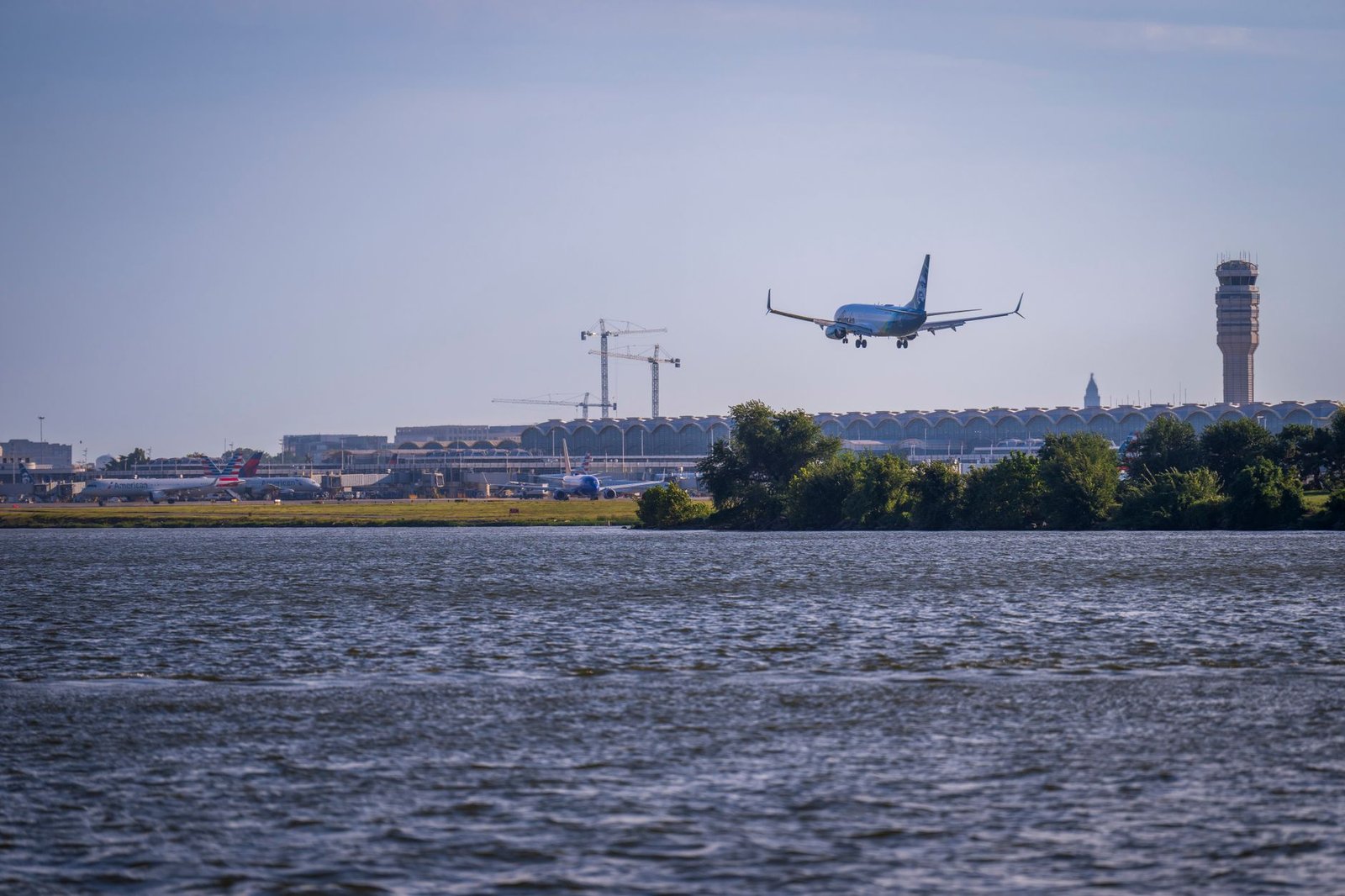
FAA Ground Stop at Reagan National Airport: What You Need to Know
On July 14, the FAA issued a ground stop at Reagan National Airport (DCA) in Washington, D.C., as part of a VIP security event coinciding with Iraqi Prime Minister Mohammed Ali al-Sudani’s visit to the White House. The ground stop triggered more than 126 flight cancellations and pushed average delays to approximately 164 minutes, disrupting thousands of travelers across the country.
What Happened at Reagan National Airport on July 14?
The Federal Aviation Administration (FAA) placed a temporary ground stop on flights operating in and out of Ronald Reagan Washington National Airport on July 14. Ground stops of this nature are a standard — though disruptive — security protocol when foreign heads of state or other high-level dignitaries visit the Washington, D.C. area.
The restriction was directly linked to the White House visit of Iraqi Prime Minister Mohammed Ali al-Sudani, whose trip required enhanced airspace security measures over the National Capital Region. DCA sits just across the Potomac River from Washington, D.C., making it one of the most tightly controlled commercial airports in the United States even under normal operating conditions.
According to flight tracking data, the ripple effects of the ground stop were significant:
- Over 126 flights were cancelled at DCA on that day.
- Average flight delays reached approximately 164 minutes — nearly three hours.
- Hundreds of additional flights experienced shorter but still meaningful delays.
- Connecting passengers at airports across the U.S. were also affected as inbound DCA flights failed to arrive on schedule.
Why Does a VIP Visit Cause an Airport Ground Stop?
Reagan National Airport is uniquely vulnerable to airspace restrictions because of its proximity to the White House, the U.S. Capitol, and other sensitive federal buildings. The airport operates under some of the strictest airspace rules in the nation, known as the Special Flight Rules Area (SFRA) and the Flight Restricted Zone (FRZ).
When a foreign head of government or other senior VIP arrives in Washington, the Secret Service, FAA, and other federal security agencies coordinate to ensure that no aircraft pose a threat during sensitive movements — such as a motorcade from Joint Base Andrews or a helicopter transfer. This typically requires halting or severely restricting commercial flight operations at DCA for a window of time.
These ground stops are not announced far in advance, which makes it difficult for airlines to proactively reroute passengers or cancel flights with enough notice. As a result, travelers often find themselves stranded at the gate or already aboard aircraft waiting on the tarmac.
Who Was Visiting the White House?
The security event was triggered by the arrival of Iraqi Prime Minister Mohammed Ali al-Sudani for a scheduled meeting at the White House on July 14. Al-Sudani has served as Prime Minister of Iraq since October 2022, and high-level U.S.-Iraq diplomatic engagements routinely require full VIP security protocols in the Washington area.
Meetings between the U.S. President and the Iraqi Prime Minister typically involve discussions of bilateral security cooperation, counter-terrorism efforts, economic ties, and regional stability in the Middle East. These are significant diplomatic engagements that warrant the highest levels of protection under federal security guidelines.

How Did the Ground Stop Affect Travelers?
For passengers flying through Reagan National Airport on July 14, the day was defined by uncertainty and frustration. The impact was felt in several ways:
- Cancelled flights: More than 126 departures and arrivals at DCA were scrubbed entirely, leaving passengers scrambling to rebook.
- Long tarmac and gate delays: Average delays of 164 minutes meant many travelers waited nearly three hours beyond their scheduled departure times.
- Missed connections: Because DCA serves as a hub for several carriers, missed connections cascaded to airports in Atlanta, Chicago, Boston, New York, and other major cities.
- Limited rebooking options: With so many flights cancelled simultaneously, available seats on alternative flights filled quickly, forcing some passengers to travel a day later.
Airlines operating at DCA — including American Airlines, which has a significant presence at the airport, along with Southwest, Delta, and United — were forced to manage the situation in real time, issuing travel waivers where possible to allow passengers to rebook without fees.
Is This the First Time DCA Has Been Shut Down for a VIP Event?
No. Reagan National Airport has a well-documented history of ground stops and airspace restrictions tied to high-profile events in Washington. The airport has been temporarily restricted during:
- Presidential inaugurations and State of the Union addresses
- Visits from foreign heads of state and government
- National security emergencies and elevated threat levels
- Major protests or security events near the National Mall
What made the July 14 event particularly disruptive was the scale of the cancellations and the length of average delays, which exceeded typical VIP-related ground stop impacts. Travel analysts and aviation observers noted that the 164-minute average delay ranked among the more severe VIP-related disruptions at DCA in recent memory.
What Can Travelers Do When DCA Has a Ground Stop?
Travelers who find themselves caught in a DCA ground stop have limited but important options:
- Check the FAA’s Air Traffic Control System Command Center (ATCSCC) website for real-time ground delay program updates before heading to the airport.
- Contact your airline immediately — most carriers issue travel waivers during major disruption events that allow free rebooking.
- Consider alternate airports: Washington Dulles International Airport (IAD) and Baltimore/Washington International Airport (BWI) are viable alternatives that are less susceptible to DCA-specific airspace restrictions.
- Use airline apps for the fastest rebooking options, as phone hold times surge during mass disruption events.
- Know your rights: Under DOT rules, passengers on cancelled flights are entitled to a full refund if they choose not to travel on an alternative flight.
Why Does This Keep Happening at Reagan National?
The fundamental tension at Reagan National Airport is geographic. DCA is positioned less than three miles from the U.S. Capitol and fewer than five miles from the White House. No other major commercial airport in the United States sits in such close proximity to the seat of federal government.
Security officials argue that maintaining strict airspace control around Washington is non-negotiable, particularly in the post-9/11 security environment. Critics, including some aviation industry groups and frequent travelers, contend that the frequency and unpredictability of these ground stops make DCA an unreliable travel option and cost airlines and passengers millions of dollars annually in disruption-related expenses.
There is no simple fix. Expanding DCA’s capacity or relocating it is not realistic, and the security imperatives that drive ground stops are unlikely to change. The most realistic path forward for travelers is awareness — knowing that DCA carries an inherent risk of VIP-related disruptions and planning accordingly.
Frequently Asked Questions
Why did the FAA issue a ground stop at Reagan National on July 14?
The FAA issued a ground stop at Reagan National Airport (DCA) on July 14 as part of a VIP security protocol tied to Iraqi Prime Minister Mohammed Ali al-Sudani’s visit to the White House. These restrictions are standard procedure when foreign heads of government visit Washington, D.C.
How many flights were cancelled at DCA on July 14?
More than 126 flights were cancelled at Reagan National Airport on July 14 as a direct result of the FAA ground stop. Average delays for flights that did operate reached approximately 164 minutes.
Can airlines get compensation for VIP-related ground stops at DCA?
Airlines generally cannot seek compensation from the government for security-related ground stops, as these are treated as mandatory safety and national security measures. Passengers, however, are entitled to refunds on cancelled flights under DOT regulations.
What airports can I use instead of Reagan National to avoid VIP ground stops?
Washington Dulles International Airport (IAD) in Virginia and Baltimore/Washington International Airport (BWI) in Maryland are the two primary alternatives. Both airports are farther from the restricted airspace around central Washington and are significantly less affected by VIP-related ground stops.